
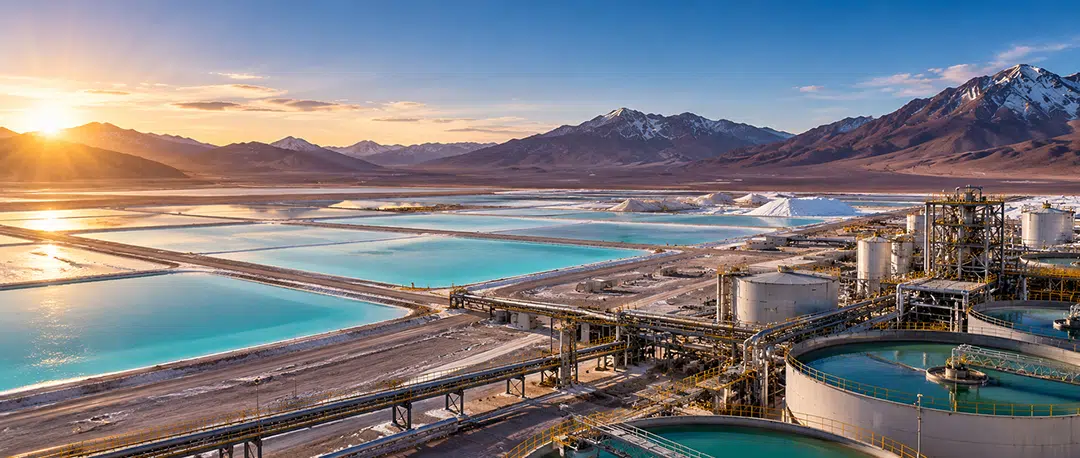
South America is at the center of the global lithium supply chain. Argentina and Chile already have operating lithium assets, while new projects and expansions are adding production capacity across the region.
But the next production opportunity may not always require a new mine or a new plant.
Existing assets can often deliver more—if operators know where production is being lost and how to remove those constraints.
As lithium producers face pressure to improve output, recovery, costs, and water efficiency, the focus is shifting from simply building capacity to getting more performance from assets already in operation.
Start With Where Production Is Being Lost
For existing lithium operations, constraints can emerge across the value chain—from brine extraction and wellfield performance to evaporation, processing, utilities, equipment reliability, and downstream conversion.
The first step is therefore to establish a clear performance baseline.
Key questions include:
- Where are production bottlenecks occurring?
- Which assets are operating below their design potential?
- Where are recovery losses occurring?
- Which equipment constraints are limiting throughput?
- How are feed and operating conditions affecting performance?
- Where are maintenance issues creating recurring downtime?
A data-backed assessment can identify the few constraints that have the greatest impact on production.
Optimize the Wellfield and Process Together
For brine-based lithium operations, production performance is closely connected to the relationship between the resource, wellfield, and processing system.
Wellfield behavior can change over time. Brine chemistry, flow rates, lithium concentration, pumping strategies, and reservoir conditions can all influence production.
Optimization therefore needs to look beyond individual assets.
Resource behavior → Wellfield performance → Process recovery → Production output
Connecting these variables can help operators identify opportunities to improve extraction and processing without simply adding more infrastructure.
Remove Bottlenecks Before Adding Capacity
Expansion is not always the fastest route to higher production.
Existing plants may contain underutilized equipment or hidden constraints that prevent the operation from reaching its full potential. Utilities, material flows, instrumentation, control loops, equipment availability, and process interfaces can all become bottlenecks.
A structured debottlenecking exercise can help identify where targeted engineering changes can unlock additional capacity.
This could involve:
Process optimization | Equipment upgrades | Control improvements | Utility optimization | Automation enhancements | Maintenance improvements
The objective is to increase throughput while minimizing unnecessary capital expenditure.
Turn Plant Data into Production Intelligence
Most operating lithium assets generate significant volumes of process and equipment data. The challenge is turning that data into decisions.
Industrial connectivity can bring data from field devices, control systems, equipment, and production systems into a common operational view.
Advanced analytics can then help identify process deviations, equipment degradation, abnormal operating conditions, and production losses.
Digital twins can support what-if analysis and help teams evaluate process changes before implementing them in the plant.
AI can take this further by helping identify patterns that may not be immediately visible through conventional monitoring.
The goal is not more data. It is better production decisions.
Where Utthunga Can Help?
Utthunga can help South American lithium producers connect process engineering, automation, industrial connectivity, and digital intelligence to improve existing asset performance.
Its capabilities can support:
- Process & Plant Engineering – identify constraints and optimize plant performance.
- Automation & Controls – improve control strategies and process stability.
- Industrial Connectivity – connect equipment, control systems, and operational data.
- Digital Twin & Simulation – evaluate optimization scenarios before implementation.
- AI & Analytics – identify production losses, anomalies, and reliability opportunities.
- Asset Reliability – improve equipment availability and maintenance effectiveness.
This approach is particularly relevant as regional producers pursue phased expansions and seek to leverage existing infrastructure rather than treating every production increase as a greenfield development. Recent expansion plans in Argentina demonstrate this direction, including phased capacity additions designed to leverage existing infrastructure and operating experience.
Looking to unlock higher production from your existing lithium assets?