
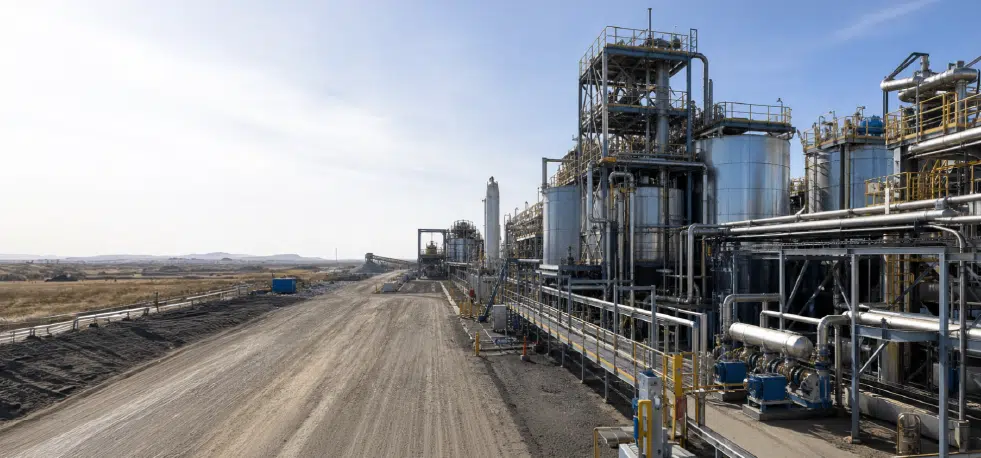
Lithium is entering a new performance race. According to Global Critical Minerals Outlook 2026 Global lithium demand grew by around 25% annually over the past two years, while global battery demand surpassed 1.5 TWh in 2025, growing more than 35%. Lithium prices have also more than doubled amid stronger energy-storage demand and constrained supply.
As DLE moves toward commercial scale, technology providers are competing on recovery, selectivity, water use, energy efficiency, and processing speed. But in 2026, the benchmark is shifting from technology performance to plant economics and operational resilience.
The question is no longer simply:
“How efficiently can we extract lithium?”
It is:
“How efficiently can the entire plant produce it at commercial scale?”
For producers scaling Direct Lithium Extraction (DLE), recovery alone is no longer enough. Commercial viability depends on balancing recovery, purity, throughput, energy, water, reliability, and cost—and connecting these metrics to operational decisions.
Here are the 10 KPIs lithium processing facilities that should prioritize.
1. Lithium Recovery Rate
Measure the percentage of lithium captured from feed or brine. Higher recovery improves resource utilization, but the additional energy, reagent, and equipment costs must justify the gain.
2. Product Purity
Track lithium concentration and key impurities throughout the process. Higher recovery has limited value if the product requires significant downstream treatment.
3. Production Throughput
Measure feed processed and lithium produced per hour, day, and year. Tracking throughput across process stages helps identify bottlenecks before they constrain production.
4. Energy Intensity
Track kWh per tonne of LCE across extraction, pumping, separation, purification, and utilities. Correlate energy throughput and operating conditions to identify optimization opportunities.
5. Water Intensity
Track water intake, recycling, reuse, and losses per tonne of LCE. DOE notes that some geothermal DLE approaches have demonstrated the potential for 99% less water per tonne of lithium than other lithium mining processes. Source: U.S. Department of Energy, Office of Geothermal.
6. Reagent Consumption
Measure reagent consumption per tonne of LCE and correlate it with feed chemistry and operating conditions. This can reveal process drifts and opportunities to reduce OPEX.
7. Plant Availability
Track availability, mean time between failures (MTBF), mean time to repair (MTTR), and unplanned downtime across pumps, membranes, analyzers, controls, and utilities.
8. Process Stability
Monitor pH, temperature, pressure, flow, concentration, and impurity levels in real time. During scale-up, small deviations can translate into significant production losses.
9. Cost per Tonne of LCE
Combine energy, reagents, water, maintenance, labor, utilities, and downtime into one economic view. A high-recovery process is not commercially attractive if its total production cost remains uncompetitive.
10. Carbon & Environmental Intensity
Track CO₂ emissions, energy, water, waste, and other environmental indicators alongside production to connect sustainability with operational performance.
From KPI Monitoring to Plant Intelligence
The next competitive advantage is not simply tracking KPIs—it is connecting them.
A drop in recovery should trigger more than a dashboard alert. Operators need to determine whether the cause is feed variability, equipment degradation, process instability, reagent consumption, or control-system performance—and understand its impact on throughput and cost.
Where Utthunga Fits?
Lithium scale-up is not just an extraction challenge—it is a plant performance challenge.
Utthunga brings together process and plant engineering, industrial automation, OT-IT convergence, IIoT, advanced analytics, and AI to connect critical KPIs, uncover root causes, and turn plant data into actionable operational intelligence.
With 20+ years of industrial engineering experience and a 1,300+ member engineering team, Utthunga helps mining and minerals organizations optimize processes, assets, automation, and digital operations—from engineering and simulation to real-time monitoring and intelligent decision-making.
Track the KPI. Understand the cause. Predict the impact. Optimize the outcome.
Because commercial-scale lithium processing will not be defined by recovery alone.
It will be defined by how intelligently the entire plant performs.
Ready to move from KPI monitoring to plant intelligence?
Talk to Utthunga about building a smarter, more connected lithium processing operation.