
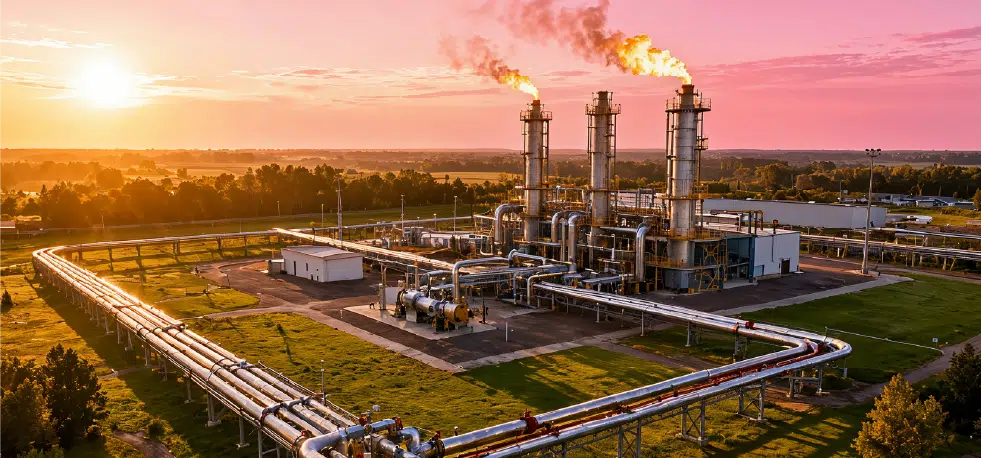
Three Ways to Monetize Flare Gas:
- Electricity (Flare-to-Power)
- High-value fuels (Flare-to-LNG / Gas-to-Liquids)
- Digital compute revenue (Flare-to-Data Centers, crypto, AI workloads)
Flare Gas Recovery (FGR) is the core technological and operational foundation of Zero Flare Networks A Zero Flare Network (ZFN) represents a transformative approach aimed at eliminating routine gas flaring by capturing, processing, and monetizing this stranded gas. Rather than treating flare gas as waste, ZFN frameworks integrate advanced engineering, digital monitoring, and modular conversion systems to convert gas into useful outputs such as electricity, fuels, or computational power. By doing so, they deliver both environmental sustainability and economic value, effectively aligning energy production with global climate and efficiency goals.
How Zero Flare Networks Drive Environmental Sustainability?
By capturing and converting flare gas instead of burning it:
- Methane emissions are minimized
- CO₂ output is reduced
- Air quality improves due to lower pollutant release
Modern Zero Flare solutions can achieve greater than 85% emission reduction, directly contributing to climate targets such as net-zero commitments and ESG goals.
- Energy that would be wasted is converted into electricity or fuel
- Remote oil fields can become self-sufficient in power
- Dependence on fossil fuel imports or diesel generators is reduced
For example, Flare-to-Power systems use engine-generator units (250–500 kW each) to produce electricity. These can operate in:
- Off-grid environments
- Microgrids
- Grid-synchronized systems
This improves overall energy utilization and reduces energy waste on a global scale.
- Nitrogen oxides (NOx)
- Sulfur dioxide (SO₂)
- Volatile organic compounds (VOCs)
- Black carbon (soot)
These pollutants contribute to smog, acid rain, and respiratory health issues. Zero Flare Networks mitigate this by:
- Eliminating continuous flaring
- Implementing controlled gas processing
- Using advanced purification methods such as gas chromatography
By improving air quality, ZFNs also support public health and ecological preservation near oil and gas facilities.

- Monitoring emissions in real time
- Reporting ESG performance metrics
- Providing auditable carbon reduction data
With integrated SCADA systems, predictive maintenance, and remote monitoring, companies can ensure operational transparency and regulatory adherence. This enhances corporate sustainability profiles and improves investor confidence.
Key features include:
- Modular containers for gas processing and data centers
- Scalable architecture across multiple oil wells or basins
- Adaptability to varying gas volumes and compositions
This flexibility ensures that even small or remote flare sites can adopt sustainability practices, expanding the environmental benefits across the industry.
- Generating $1M+ annual revenue per block
- Enabling high-value fuel production
- Supporting digital compute markets like crypto mining
These revenue streams encourage oil and gas operators to adopt flare reduction technologies proactively rather than merely complying with regulations. This market-driven approach accelerates the transition to sustainable practices.
Role of End-to-End Solutions in Zero Flare Networks
1. Project Consulting
- Feasibility studies and gas volume analysis
- Infrastructure and zoning assessments
- Regulatory and permitting evaluation
2. Technical and Economic Analysis
- Feasibility studies and gas volume analysis
- Infrastructure and zoning assessments
- Regulatory and permitting evaluation
3. Turnkey EPC Implementation
- Engineering, procurement, construction, and commissioning
- Deployment of integrated E2C platform modules:
-
- Gas conditioning
- Power generation
- Microgrid systems
- Data center infrastructure
4. Operations and Monitoring
-
- Remote SCADA systems
- Predictive maintenance
- Continuous emissions tracking
These integrated services ensure seamless implementation and long-term sustainability of Zero Flare projects.
Looking Forward
Flare gas, once considered a byproduct, is now being transformed into electricity, fuels, and digital infrastructure turning an environmental liability into a strategic asset. With emission reductions exceeding 85%, rapid deployment timelines, and strong financial returns, Zero Flare Networks offer a practical and scalable solution to one of the industry’s longstanding challenges.
From zero flare gas recovery and power generation to digital monitoring and predictive analytics, Utthunga delivers end-to-end engineering solutions that help operators eliminate routine flaring while maximizing operational and financial performance. To know more about our Zero Flare Network approach and project expertise, get in touch with us here.