
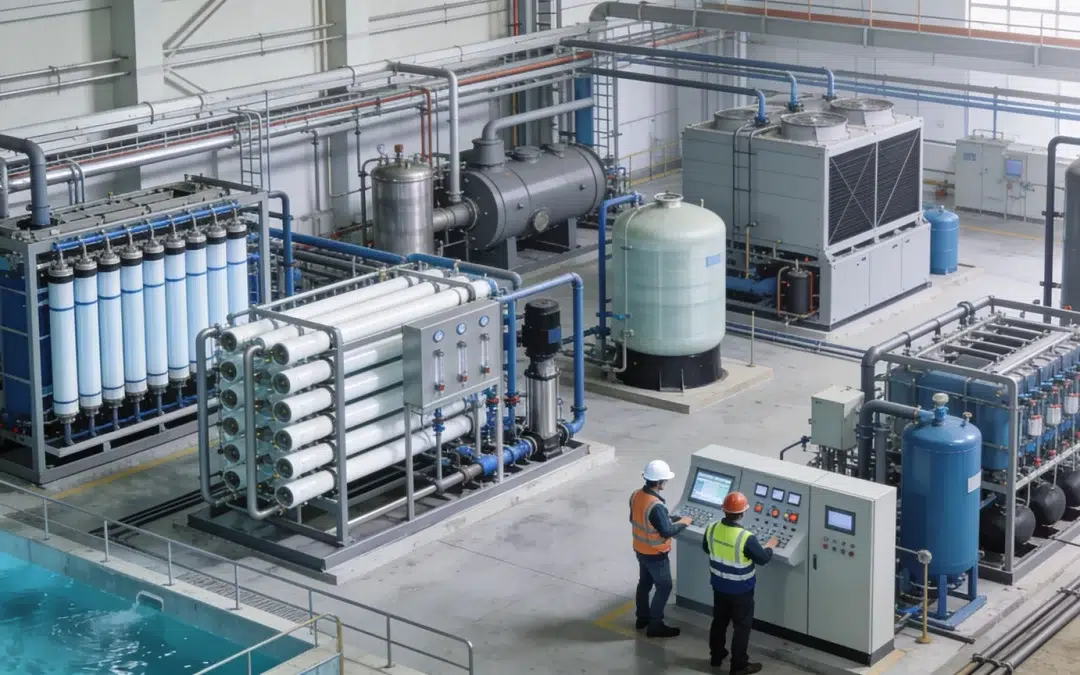
With tightening environmental regulations and growing global water stress, operators are increasingly compelled to shift from disposal-based strategies to sustainable water management practices. Produced water desalination, therefore, is not just an environmental necessity but also a strategic opportunity for water reuse, resource recovery, and cost optimization.
However, unlike seawater or brackish water desalination, produced water treatment is significantly more complex. Its highly variable composition and contamination profile demand tailored, multi-stage treatment systems. Addressing these challenges requires not only advanced technologies but also integrated engineering, digital intelligence, and operational expertise. This is where companies like Utthanga play a transformative role by bridging technology and execution.
Key Challenges in Produced Water Desalination
Produced water composition varies widely depending on reservoir geology, extraction techniques, and the age of the field. Early-stage wells may produce relatively cleaner water, while mature wells often generate highly saline and contaminated streams.
- TDS levels: 5,000 to >300,000 mg/L
- Fluctuating hydrocarbons, solids, and chemical additives
- Variations in temperature, pH, and hardness
Impact:
This variability necessitates flexible and adaptive treatment solutions. Standardized systems often fail to perform efficiently, increasing capital expenditure (CAPEX) and operational complexity.
Produced water contains both free and emulsified oil, along with dissolved organic compounds such as BTEX (benzene, toluene, ethylbenzene, and xylene), phenols, and organic acids.
Impact:
- Severe fouling of membranes and filtration systems
- Reduced efficiency of desalination processes
- Increased need for chemical cleaning and maintenance
This organic load poses one of the biggest barriers to effective membrane-based desalination.
Scaling results from the precipitation of inorganic salts such as calcium carbonate, barium sulfate, and strontium sulfate, while fouling can be organic, inorganic, or biological in nature.
Impact:
- Frequent shutdowns for cleaning
- Reduced membrane lifespan
- Increased energy and chemical consumption
- Higher operating costs
Scaling remains one of the most persistent operational challenges in produced water treatment.
Scaling results from the precipitation of inorganic salts such as calcium carbonate, barium sulfate, and strontium sulfate, while fouling can be organic, inorganic, or biological in nature.
Impact:
- Frequent shutdowns for cleaning
- Reduced membrane lifespan
- Increased energy and chemical consumption
- Higher operating costs
Scaling remains one of the most persistent operational challenges in produced water treatment.
Heavy metals such as lead, mercury, and arsenic, along with NORM, raise environmental and safety concerns.
Impact:
- Complex disposal requirements
- Strict regulatory compliance
- Health and environmental risks
These contaminants require specialized handling and monitoring protocols.
Desalination processes generate concentrated brine streams that are difficult to dispose of, especially in inland or arid regions.
Impact:
- Environmental risks from improper disposal
- High transportation and treatment costs
- Regulatory constraints
Brine management is often the deciding factor in project feasibility.
Produced water desalination demands significant energy, particularly in high-pressure or thermal systems.
Impact:
- High operational expenditure (OPEX)
- Increased carbon footprint
- Limited scalability
Energy efficiency is therefore a critical design consideration.
Solutions and Treatment Strategies:
Effective pre-treatment is essential for removing oil, suspended solids, and colloidal matter before desalination.
- Dissolved Air Flotation (DAF)
- Ultrafiltration (UF)
- Media filtration
Benefit: Protects downstream membranes and improves system efficiency.
Technologies such as ozone and UV/H₂O₂ break down complex organic compounds into simpler, biodegradable forms.
Benefit:
- Reduces organic fouling
- Improves desalination performance
- Enhances water quality
Technologies like Reverse Osmosis (RO), Forward Osmosis (FO), and Nanofiltration (NF) are used to maximize water recovery.
Benefit:
Improves efficiency while reducing the volume of reject streams.
For ultra-high salinity water, thermal processes such as Multi-Effect Distillation (MED) and Mechanical Vapor Compression (MVC) are often preferred.
Benefit:
Reliable performance under extreme conditions with lower sensitivity to fouling.
ZLD systems combine membrane and thermal processes to eliminate liquid waste entirely.
Benefit:
- Maximizes water recovery
- Eliminates disposal challenges
- Ensures regulatory compliance
Use of antiscalants, biocides, and corrosion inhibitors helps maintain system integrity.
Benefit:
Reduces fouling and scaling, extending equipment life.
Combining multiple technologies ensures flexibility and resilience.
Benefit:
Optimized performance for complex and variable water compositions.
Integration of sensors, automation, and data analytics enables real-time optimization.
Benefit:
- Predictive maintenance
- Reduced downtime
- Lower operational costs
How Utthunga Enables Efficient Produced Water Desalination?
Utthanga provides both basic and detailed engineering tailored to specific water chemistries.
- Customized treatment train design
- Integration of pre-treatment, desalination, and ZLD systems
- Adaptation to variable feedwater conditions
Impact:
Reduces technical risks and enhances plant reliability.
Utthanga leverages digital platforms including automation, data analytics, and digital twins.
- Real-time water quality monitoring
- Predictive maintenance
- Intelligent chemical dosing
Impact:
- Minimized downtime
- Improved process efficiency
- Lower operating costs
Through simulation and advanced modeling, Utthanga optimizes operational parameters.
- Reduction in energy consumption
- Higher recovery rates
- Lower chemical usage
Impact:
Makes desalination more economically viable and sustainable.
Utthanga enables flexible plant designs that adapt to changing field requirements.
- Modular skid-based systems
- Rapid deployment
- Scalability with production increase
Impact:
Ensures operational agility and faster implementation.
Utthanga aligns projects with evolving environmental and regulatory standards.
- ZLD implementation
- Water reuse strategies
- ESG alignment
Impact:
Supports long-term sustainability and compliance.
Utthanga works closely with EPC contractors, technology licensors, and operators.
Impact:
- Seamless integration of multi-vendor systems
- Reduced implementation delays
- Improved project outcomes
Emerging Trends:
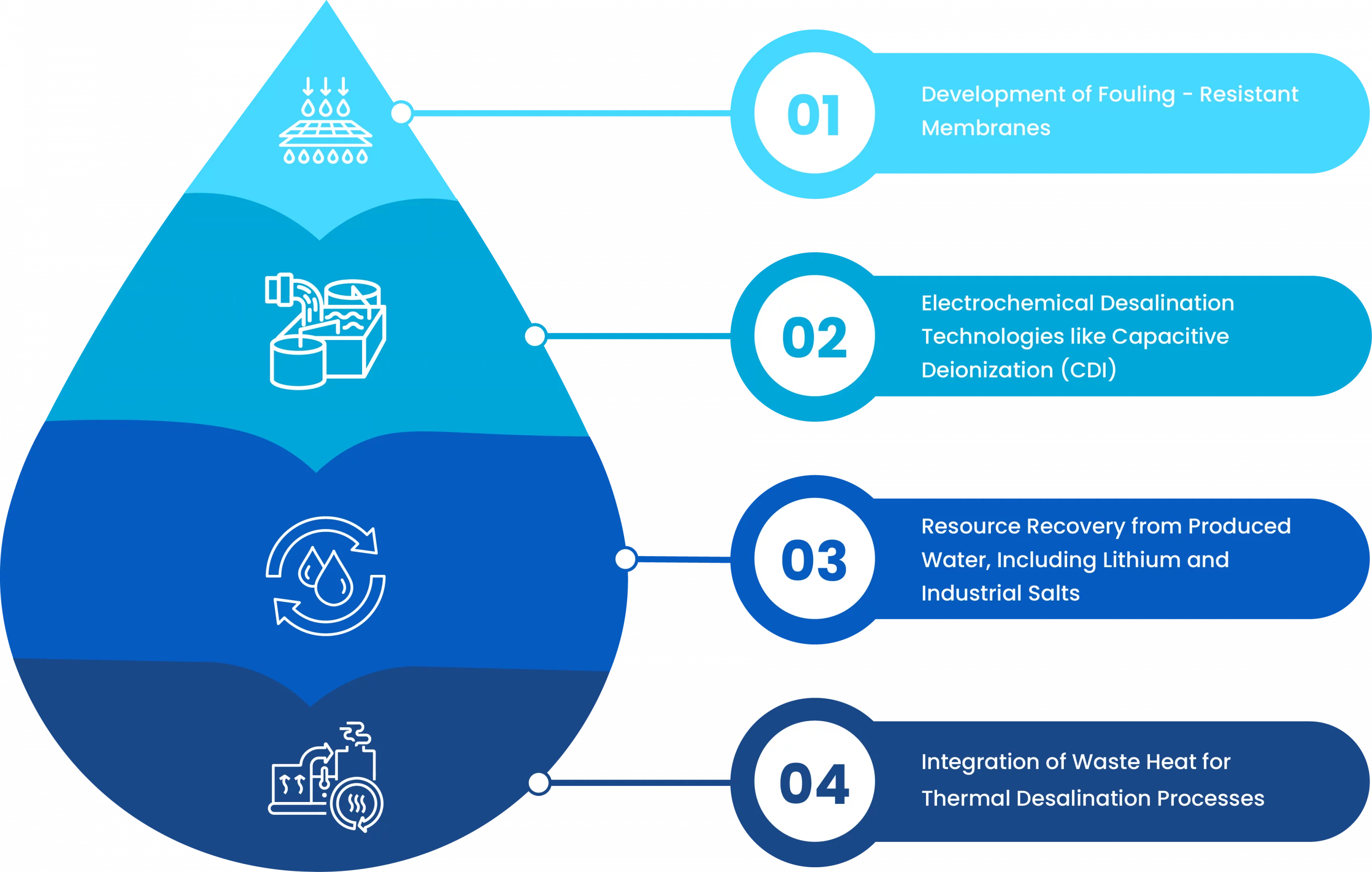
Roadmap Ahead
Produced water desalination has evolved from a compliance-driven necessity to a strategic opportunity for the oil and gas industry. While the challenges are significant—ranging from high salinity and fouling to energy consumption and brine management—advancements in treatment technologies and system design are making sustainable solutions increasingly viable.
The key to success lies in integrating multiple technologies with intelligent design and real-time optimization. This is where Utthanga’s role as a technology and engineering enabler becomes pivotal. By combining deep process engineering expertise, digital intelligence, and seamless system integration, Utthanga helps operators transform produced water from a costly waste stream into a valuable resource.
As the industry moves toward sustainability and circular water management, forward-thinking companies that invest in advanced desalination and digital optimization will be best positioned to achieve both environmental compliance and operational efficiency.
Through this integrated approach, Utthunga partners with operators to design, engineer, and optimize produced water desalination systems that deliver operational excellence, environmental compliance, and long-term sustainability. To discover how we can support your water management journey, get in touch with us here.