Dr. Shankar, Co-founder & Director, GyanData Pvt. Ltd.
Process Design Changes Offer the Highest Gains
One of the most impactful ways to improve energy efficiency is through changes in process design. This may involve rerouting pipelines, adding a few heat exchangers, or making other system-level adjustments. While these modifications do require some investment, the payback period is typically between 6 months and 1 year. The energy savings, especially in thermal energy consumption, can be significant — ranging from 10% to 30%.
Shifting Focus: Thermal and Electrical Energy Utilization
Over the past 5 to 10 years, the industry’s focus has expanded beyond just thermal energy to include a more integrated view of both thermal and electrical energy usage. The challenge now is: how can we optimize combined energy consumption within a process?
In chemical processes, approximately 80% of energy consumption is thermal, while the remaining 20% is electrical. This presents an opportunity: if a portion of thermal energy usage can be shifted to electrical energy — in a cost-effective way — we can replicate the energy transition seen in the automotive industry, where internal combustion engines are being replaced by battery-powered electric vehicles.
Partial Shift Toward Electrification
While it’s not feasible to fully shift a chemical process from thermal to electrical energy, a partial transition is possible. If the electrical energy is sourced from renewables, this shift becomes not only technically viable but also sustainable and economical.
Evolving Tools: Modified Pinch Technology
To support this integrated approach, Pinch Technology — traditionally used for optimizing thermal energy — is now being adapted to also consider electrical energy. This evolution allows for more comprehensive energy integration strategies, enabling industries to maximize efficiency across both thermal and electrical domains.
Example:
A power plant boiler where hot flue gas exits containing leftover heat. Instead of wasting it, we transfer this heat to two places: the air used for combustion and the water fed into the steam tubes. You have two choices:
- Heat the air first, then the water, or
- Heat the water first, then the air.
It’s due to thermodynamics—heat transfer depends on temperature differences between streams, not just flow. So, if you heat the water first when the flue gas is hottest, you get more heat recovery. This subtle change in configuration can significantly reduce thermal energy consumption.
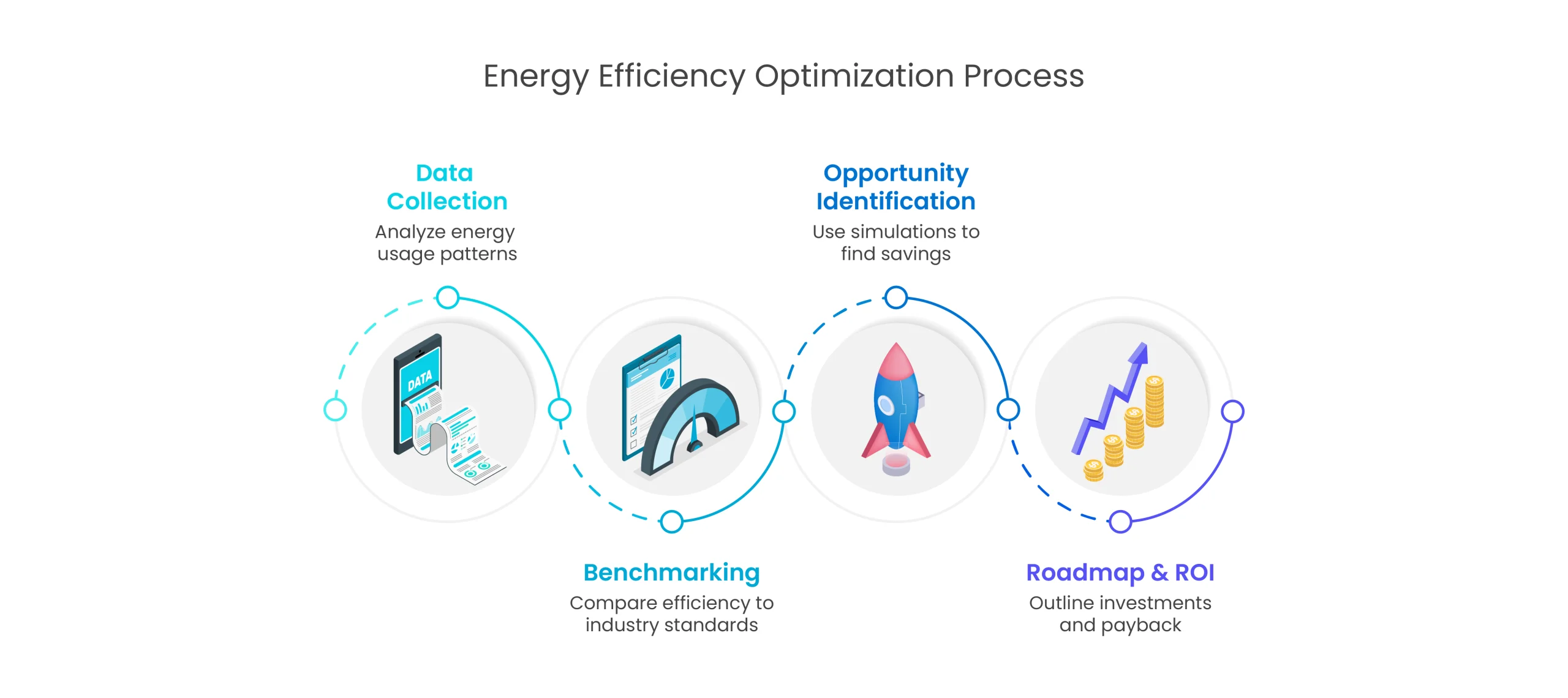
This approach is broadly applicable to any plant where heat recovery matters. By reviewing existing heat exchanger setups, plants can often identify simple configuration changes that yield significant energy savings. Tools like pinch technology help formalize this analysis, identifying where savings are possible, estimating costs, and calculating payback times.